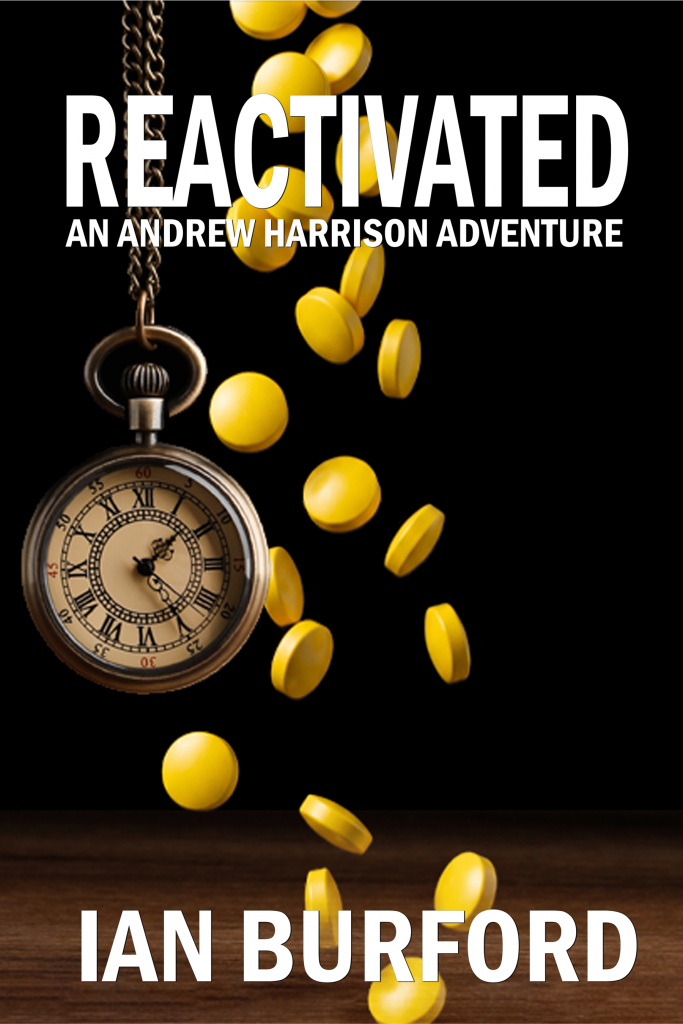
REACTIVATED
An Andrew Harrison Adventure
Genre: Thriller
Synopsis
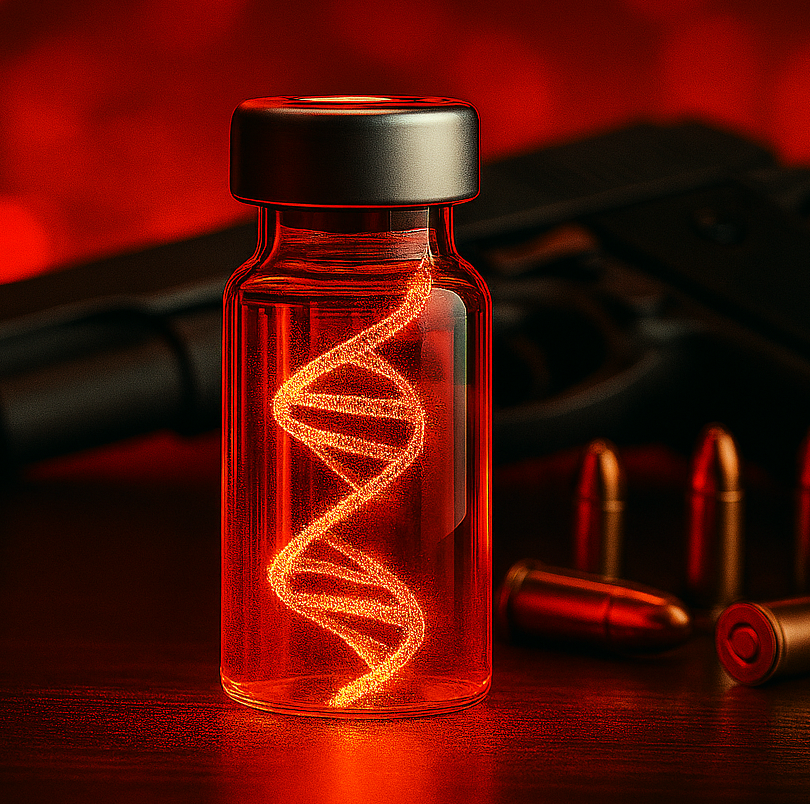
Former Royal Marines operative Harry Harrison is dragged back into the shadows of the Accord—a clandestine international agency built to police rogue states—to investigate a rash of seemingly random political assassinations across Europe. What he uncovers is a chilling conspiracy: a right-wing extremist faction known as the Founders Trust has weaponized Sereleyne, a psychological drug capable of deep hypnotic control. By turning vulnerable therapy patients into unwitting sleeper assassins, the Trust has already compromised judges, senators, and intelligence officials through ruthless blackmail. Dubbed Operation Pale Crown, the plot is simple yet devastating: manufacture domestic terrorism, dismantle progressive politics, and install authoritarian regimes worldwide.
But the deadliest threat is pulling the strings from the inside. Sir Alistair Thorne—head of the UK’s Joint Intelligence Committee and a leader within the Accord itself—is pulling the strings for the enemy.
When the conspiracy strikes back, Harry’s world shatters. His handler is killed, his trusted analyst, Dan Smith, is captured and brutally tortured, and a global kill order is slapped on Harry’s back. Forced to evade the very agency he once served, Harry must wage a desperate rogue war. His only lifeline is Myah Willis, a brilliant medical researcher who holds the key to neutralizing Sereleyne, alongside a fractured handful of operatives willing to risk everything for the truth.
From the streets of London to the high-rises of Los Angeles, the chase culminates in a daring, high-stakes raid on a secure facility hidden deep inside the Shard. To save Dan, Harry orchestrates a frantic rescue mission that blows their cover wide open. With nowhere left to hide and the clock ticking down, Harry forces the immediate, global publication of the conspiracy’s evidence—triggering a wave of international raids that arrest Thorne and bring the Founders Trust to its knees.
Yet, the victory is hollow. As Harry, Myah, and Dan sift through the aftermath, they make a terrifying discovery: RED 217, a lethal biological weapon from a past operation, has fallen into the hands of the Trust’s surviving cells. Before the ink can dry on their victory, breaking news alerts report hundreds of students dying in Boston from an unprecedented, deadly meningitis strain.
The conspiracy hasn’t been stopped. It’s just arrived in America.
Reactivated explores institutional betrayal, the weaponisation of mental health, and the fragility of democracy against coordinated extremism.
– Chapter 1 –
Jamie Carter stepped out of the clinic into the afternoon
light, squinting as his eyes adjusted to the brightness of the city street. For
the first time in weeks, he felt lighter. Not happy, exactly, but steadier—as
if a gear deep inside had finally clicked into place.
He’d lived with depression for most of his adult life. The
pills helped; therapy, less so. He’d never seen the point in talking through
his problems. To him, the only thing that mattered was getting through the day.
Dissecting his feelings in front of a stranger felt like picking at a
scab—painful and pointless. But his mother had pleaded, her eyes red-rimmed
from too many shed tears, and Jamie didn’t have the heart to disappoint her. So
he went every Thursday, at the same time, in the same room, enduring the same
weary routine.
Until today.
Today, a new therapist appeared: Dr Keller. He had a calm
voice, a sharp suit, and eyes that didn’t blink quite fast enough. Jamie
gripped the door handle as panic rose inside him, urging him to flee. But the
doctor’s reassuring tone pulled him back from the edge. His grip slowly
loosened as he stepped onto the deep carpet.
Keller had a different approach. He abandoned the usual
endless talking in favour of something new—something he claimed would be more
effective. Jamie had never tried hypnotherapy; the word alone made him think of
stage tricks and swinging watches—cheap theatrics. But Keller’s voice was low
and certain, and before Jamie could find a reason to object, he found himself
sinking into the chair, his breath slowing.
The doctor administered bitter-tasting drops that made him
grimace. The metallic taste tightened his jaw before calm enveloped him,
washing over his body in gentle waves. He sank deeper into the warm pool of the
doctor’s suggestion, his mind growing heavy and dull.
When the hour ended, Jamie felt transformed: clear-headed
and focused. It was as if someone had swept the clutter from his mind, leaving
it clean, orderly, and sharp.
He walked home with a quiet certainty that everything would
be fine. He barely registered the heavy sag of the backpack on his shoulder. He
couldn’t recall Keller’s final instructions—words murmured just before Jamie
awoke, calm, but with a vague sense of missing time and a dull headache.
Inside the bag, hidden beneath his dog-eared notebook and
water bottle, lay a Browning 9mm pistol. Loaded. Silent. Waiting.
– Chapter 2 –
At 9:30 a.m., the temperature was already edging upward,
dispelling the lingering cool of the early morning. It was going to be a
perfect day. People had begun to gather across the park for what the news media
had billed as “the largest anti-fascist march ever held in the UK.” The
organisers estimated attendance at over one hundred thousand, and the police
seemed to be taking this seriously; at this early hour, they outnumbered the
protesters ten to one.
Hastily erected stalls lined the park entrance, stacked with
T-shirts bearing slogans from “Fight Fascism” to “Free Tibet.” Every facet of
progressive discourse was represented in the items on show—at least the items
that would turn a profit. Even at a gathering like this, capitalism was out in
full force. The punters passed by, young and privileged, marching with banners
held high and handing over fifty pounds for hoodies proclaiming “End World
Poverty,” blind to the irony. By ten o’clock, the rhythm of the day had begun
to take shape. The park, hemmed in by Victorian terraces and the distant hum of
traffic, was filling with bodies: the young, full of purpose and ideals; the
middle-aged, resolute and determined; and the older generation, bowed by the
weight of experience, all united by a common goal.
The air buzzed with anticipation. Occasional mistimed chants
broke out and faltered quickly before the slogans could gather momentum. Near
the bandstand, a group of students from Bristol unfurled a massive banner
reading “We Are the Future.” The font was bold: red on white. Dressed in
coordinated black, they scanned the crowd with stern faces. One of them, a wiry
young man in a “Living Wage” hat, adjusted his designer sunglasses as he
searched for his sister. She’d promised to bring more of their homemade placards—slogans
they’d debated heavily during meetings fuelled by pints and roll-ups.
Further down the path, an older couple stood beside a stall
selling vegan wraps and iced herbal teas. Margaret had marched against
apartheid in the seventies. Now, in her seventies, she felt the same tremor of
history beneath her feet. Her husband, Alan, wore a faded “Coal Not Dole” badge
on his lapel—a relic from another era.
The police presence was impossible to ignore. Officers in
high-visibility jackets stood in clusters, radios crackling, eyes scanning.
Some leaned against vans, sipping coffee. Others walked the perimeter with the
practised detachment of those trained to expect the worst. Their numbers still
exceeded the protesters’, but the tide was starting to turn as the morning wore
on.
From tube stations, buses, and bicycles, more people
arrived. With them came the noise: the drums, the whistles, the megaphones—the
sound of a movement waking up. The march had been advertised for weeks. The
speaker line-up had changed weekly as confirmed names dropped out under
pressure and celebrities stepped up for a taste of the limelight before their
agents pulled them out in case they upset a sponsor. Eventually, it settled
into the familiar mix of activists and politicians, each ready to tweak their speech
to suit the occasion.
As the crowd swelled, so did the counter-protests. Groups
gathered near the entrances, shouting slogans at the incoming marchers. Verbal
clashes that threatened to turn physical were held in check, for now, by a thin
veneer of tolerance that wouldn’t last the day.
Amid the swelling crowd, one figure moved with quiet intent.
Jamie Carter navigated the mass of people, his pace deliberate. The insults
hurled by counter-protesters drew no response from him. He passed the stalls,
the clusters of people forming around large banners, and the professional
volunteers wielding clipboards, hunting for sign-ups for whatever cause was the
flavour of the day.
Jamie wasn’t interested. He had one goal: to reach the front
of the stage before the crowd thickened. He was twenty-one, an apprentice
plumber working with his father. Five-foot-ten and stocky, he had the kind of
build shaped by manual labour, not gym reps. His chestnut hair was cropped
short, usually hidden under a cap. His blue-grey eyes held a guarded expression
that softened when he joked or focused on a task. Today he wore jeans, a heavy
cotton hoodie, and scuffed brown work boots with an uneven heel, the result of
his lopsided gait. His rucksack hung from one shoulder, his hand gripping the
strap. Jamie moved with certainty, his gaze locked straight ahead, the
periphery ignored.
The smells from the food trucks gathered around the park’s
edges were intoxicating: frying onions, sweet candy floss, spicy curries. The
aromas mixed into a heady cocktail as they drifted through the crowds, but
Jamie paid them no mind. He was early and determined. Near the stage, the crowd
was still loose. He found a spot close to the front, dropped his rucksack, and
sat on the soft grass. Around him, others did the same, staking their claims
even though it would be over an hour before the first speaker took the stage.
When the speaker finally appeared, the applause was raucous.
He was the political version of a warm-up act. Moving quickly from one side of
the stage to the other, he worked to involve the crowd as he spoke about the
dangers of authoritarian governments, trying to create a call-and-response
rhythm. “When they go low?” he yelled. “We go high!” the crowd responded,
though they lacked enthusiasm and sounded more rehearsed than passionate. It
was an old line, better delivered elsewhere, but he pressed on. Getting the
early crowds engaged was always a challenge, but he was making progress. “Who
deserves a living wage?” he yelled. The response was louder, more intense: “We
do!”
The speaker, Nigel Williams, was a popular member of the
Green Party. He was up-and-coming and had seen significant growth in support
recently, given the troubles the new government had found itself in. Nigel was
slick—he looked every inch the young revolutionary leader crossed with a
seasoned politician. He’d even appeared on a televised debate to answer the
question, “Is Britain too far right?” That appearance had earned him the first
spot at the protest. Nigel believed there was no such thing in politics as
being overexposed, and he’d taken every opportunity to spread the party’s
message, carefully wrapped in his own personal branding.
With the crowd warming up, becoming more involved and vocal,
he handed over the stage to the next speaker. She was, unusually for this
position in the speaking order, one of the main headliners. Nigel explained
that she was appearing in the second spot only because she had to return for an
emergency vote in Parliament. Walking onto the stage, Susan Dalton was a
picture of confidence in a light grey suit and red heels. She was the newly
appointed Environment Secretary. Getting a cabinet member to appear at the
march was a major coup, and the crowd erupted as she stepped forward.
Susan Dalton was the most popular member of the current
government by far. Her ability to explain complex reforms in plain language
without sounding patronising made her a regular on debates and morning news
shows, where she acted as spokesperson not only for the environment but for
various other policy areas. She was calm, assured, and knowledgeable, which
made her a favourite with supporters and interviewers alike. She was also
striking, her long dark hair normally held back in a ponytail, accentuating her
high cheekbones and strong jawline. Her skin was smooth, framed by bold
lipstick and a flick of eyeliner. Perhaps it was unfair that her physical
attributes had contributed to her success. After all, as she always stressed,
she wanted to be judged solely on merit. But she was a realist and had learned
early to play the hand she’d been dealt.
“Hello,” she called, her head snapping back and a distinct
grimace appearing at the microphone’s high-pitched whine. “And welcome to this,
a march that we hope will be just the start of a movement that spreads
throughout the country.” The crowd cheered enthusiastically.
Jamie Carter wasn’t cheering. He ignored the speech and the
raucous crowd. Only one voice mattered—a single instruction looping endlessly
in his mind. It had been with him all day since he left his last therapy
session, and it was what had driven him to attend the protest. Jamie knew
nothing about politics. He had no interest in the event and would have ignored
it entirely, except for the voice. That persistent, nagging voice told him to
bend down, open his backpack, and pull out the pistol hidden inside. Though
Jamie didn’t recognize it as such, it was the voice of Dr Keller.
As Susan Dalton’s speech soared, drawing cheers that
punctuated every well-rehearsed bullet point, Jamie held the gun in front of
him with both hands, pointed toward the ground. A few people nearby screamed
when they saw the weapon, but their cries were drowned out by cheers from the
rest of the crowd. He raised the pistol to aim. A scream rang out. Then the
first shot. Then eight more. Nine loud bangs shattered the afternoon, sending
the crowd scattering in terror.
It took Jamie Carter only seven seconds to empty the
magazine. When it was done, his arms dropped limply to his sides. He stood
there, silent and hollow, holding the gun in his right hand with a blank
expression. The voice—Keller’s voice—was finally quiet. Susan Dalton lay dead
on stage. Four bullets had struck her: two in the chest and one in her shoulder
that spun her around so violently the final round entered her skull from
behind, erasing her life in a millisecond. She lay face down on the stage, her
notes scattered around her, flapping like wounded birds in the light breeze.
Her speech and her life had both been cut short just when they were beginning
to show promise.
Jamie stood for a few seconds, slowly becoming aware of his
surroundings. The voice was gone. In its place was silence and a growing sense
of something broken. Protesters who moments before had been enjoying their day
now stood in a wide circle around him, mostly in stunned silence. An occasional
sob rose from the crowd, mainly from those who had fought to escape as the
shooting began.
Seconds later, he was tackled to the ground. The crowds
parted to let the police through. His body took a flying tackle from one side,
and Jamie collapsed like a sack as the wind left his lungs. Someone grabbed him
and forced him onto his front, pinning his arms behind him as the handcuffs
locked onto his wrists. The skin pinched and cut as the ratcheted locks snapped
shut. The shock of the takedown left him even more confused, and he struggled
to comprehend what was happening as he was dragged away and shoved into the
back of a waiting police van.
Book Information
Main Characters
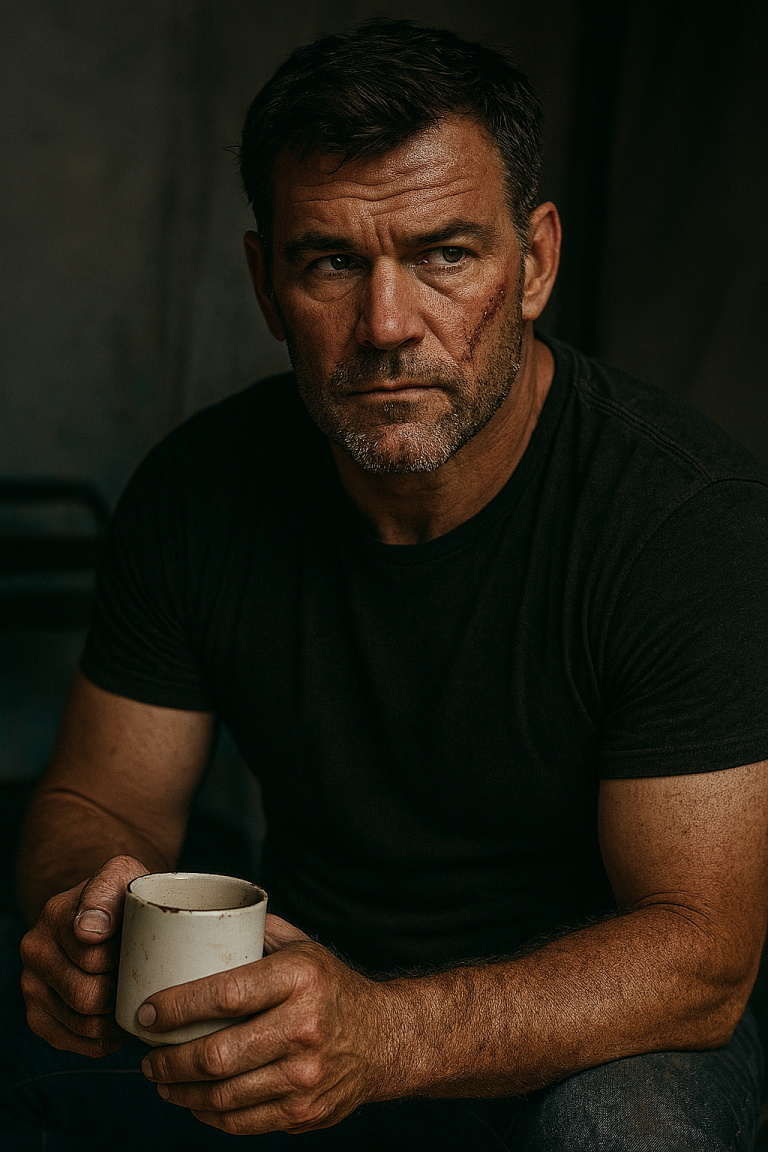
Harry
Harry thought he had buried the ghosts of RED217 when he walked away. Years ago, he accepted a forced exile by the Accord. After accepting their help to escape from Gaza in RED217 there is a price to be paid. Walking away from Myah was a calculated sacrifice made solely to shield her from the grip of the Accord, but silence was never a guarantee of safety.
Now a string of assassinations defies explanation, and Harry is forced to pull Myah back into the world he tried to save her from. As they confront the enigma of Sereleyne, Harry finds that the dynamic has shifted; to survive this conspiracy, he must rely on Myah’s brilliance as much as his own instincts.

Myah
A brilliant and resilient scientist, Myah was the one legacy Harry refused to leave behind. Formerly colleagues on the illicit RED217 project, she was shielded from the Accord’s recall only by Harry’s calculated departure. Now, the peace he bought her has expired.
Reunited with Harry, Myah is the key to unlocking the science behind a fresh wave of assassinations. As they hunt for the truth behind the mysterious Sereleyne, Myah steps out of Harry’s shadow, proving that she is no longer just a student, but a powerful force in her own right.